• Skip to primary navigation
  • Skip to main content
  • Skip to primary sidebar
  • Skip to footer
Creature Comforts Pet Services, LLC

Creature Comforts Pet Services, LLC

Compassionate care for your friend

  • Home
  • Services +
    • Cat Hotel
    • Feline Behavior
    • Pet Sitting
    • Dog Walking
    • Pet CPCR and First Aid
  • Creature Comforts Blog
  • About
  • Contact
  • Resources
  • Pet Sitting

Theresa Berrett

Dangerous Dough Ornaments & Pets

December 19, 2024 by Theresa Berrett

This favorite holiday tradition can prove deadly to pets!   

Three simple ingredients:  

  • 2 cups flour
  • 1 cup salt
  • 1 cup water 

can be mixed, flattened, and shaped into the doggone cutest tree ornaments, but if ingested by the family dog, joy can turn tragic due to the abundance of salt in the recipe!  Additional complications can arise from the paint and glitter that make the design sparkle, and…the hook the ornament hangs from!  Cats too can suffer from eating bread dough ornaments, yet they are less likely to consume the decoration.  

Salt toxicity, also known as hypernatremia, can result in the death of your pet!  Signs include:

  • Vomiting and/or diarrhea
  • Lack of coordination, tremors, seizures
  • Excessive thirst and urination
  • Decreased appetite
  • Lethargy or collapse

If creating dough ornaments is a family tradition, take extra measures to hang them high on the tree out of paws reach and secure the tree to the ceiling so that it cannot topple down.  If your pet consumes a dough ornament, contact your veterinarian or Pet Poison Helpline immediately for life-saving measures.  

Although labeled non-toxic, non-allergenic, and even non-irritating, it is important to note that children’s Playdoh is made from the same three ingredients:  water, salt, and flour, so if ingested by pets, the same ill effects can result. Some homemade playdough recipes also contain tartaric acid (potassium bitartrate ), the deadly toxin also found in grapes.  Be aware of doggie dangers and keep them out of paws reach by signing up for a Pet First Aid Class today by contacting Creature Comforts Pet Services at creaturecomfortspetsit@gmail.com

Filed Under: Pet First Aid Tagged With: salt dough ornaments

Pets Safety Tips and your Holiday Tree

December 6, 2024 by Theresa Berrett

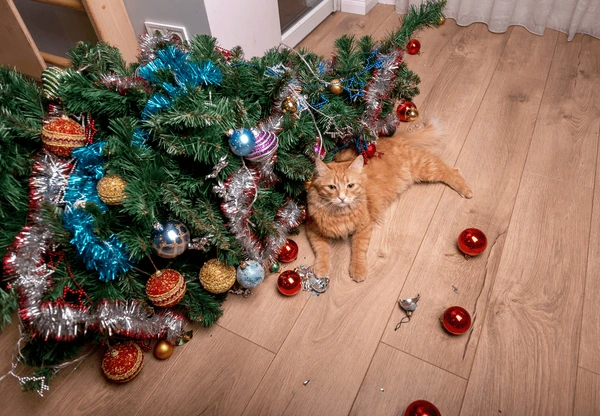
Whether artificial or real, you must look out for your pets when decorating for the holidays. To keep dogs and cats safe, here are four pet safety tips concerning the holiday tree:

1) Male dogs and cats pee on trees.  It is that simple, so when their pee station moves indoors, it becomes confusing when you say, “No!”  Consider leaving your tree undecorated for a day or two, teaching pets to stay away before you decorate. Also, choose the location wisely.  Do not place your tree in front of the window Fido watches for the mailman or the windowsill kitty suns herself daily.  To keep pets away, a short white picket fence around the tree may look festive, or giving them their own new and interesting thing to check out may do the trick. 

2) To further dog or catproof your tree, try bitter-scented sprays or position oranges, lemons, or grapefruit underneath, but only if you know these citrus scents are unappealing to your pet.  Attaching the tree, with an invisible fishing line, to a cup hook in your ceiling, could prevent it from falling over should your cat decide to use it as a jungle gym.  Of course, never place candles on the tree and tape down light cords so that pets cannot chew or get caught in them, but always supervise when any fixtures are plugged in. 

3) Never tempt pets by hanging dog biscuits, popcorn garlands, candy canes, or other food items on your tree.  Also, take care with scented packages (i.e. food, soaps, potpourri) placed underneath as well as ribbons, tinsel, ornament hooks, and string.  Any of these objects inside your dog or cat can be CAT-astrophic!  

4) Real trees require water, so cover the tree water securely with foil, plastic wrap, or a plastic lid with an “X” cut through (where the trunk goes).  The oils seeping into the water from the tree are toxic!  Additionally, cut trunks are often coated with preservatives and pesticides, so your pet will get sick and need quick veterinary care if he drinks tree water!  Pine and fir needles are sharp and can cause digestive upsets, so pick up any needles that drop before your pet ingests them or gets them caught in a paw or fur. Fake needles are not safe either if consumed, so monitor pets around ALL holiday decor.  

When you have a dog or cat, you have a furry toddler for their lifetime, so being mindful of potential problems and keeping dangers out of paws and claws reach can keep ‘the merry’ in your holiday season. Make it a New Year’s resolution to sign up for a pet first aid class by contacting Theresa at Creature Comforts or check out www.creature-comforts-pets.com  for 2025 classes!

Filed Under: Pet First Aid Tagged With: holiday and pets, pet first aid, safety

Top 5 Holiday Safety Tips

November 30, 2024 by Theresa Berrett

Practice these Top 5 Holiday Pet Safety Tips, and sign up for a Pet First Aid Class so you will have the skills and confidence to help your best friend!   

With Christmas upon us, the chances for ingestion of pet-UNfriendly foods and choking incidents, multiplies, so supervise, supervise, supervise throughout the celebration, and learn pet first aid…  

  • ROUTINE: Walk at your normal walk time, feed on schedule and don’t forget to play — it does a body good (human, canine, or feline).  Don’t forget vitamins, washing bedding, scooping litter. Holidays create added chores, but change can create anxiety in your pet coupled with the intense energy you are giving off at this time of year. Sticking to your normal routine will help. 
  • DECORATIONS:  Don’t let pets access tree water.  Don’t hang edible items on the tree.  Take care with candles and holiday scents which can upset canine and feline noses.  Ribbon, tinsel, and bread dough ornaments can all be hazardous.  When you have a furry child, you have a toddler for life that you must keep safe.  
  • COMPANY:  Dedicate playtime just for you and your dog or cat BEFORE company arrives, and then let kitties retreat to a quiet back bedroom with safe toys to keep them out of mischief — scratching post, kitty tree or chew toys for dogs, maybe even quiet music, or a radio to drowned out noise coming from the boisterous humans. If you feel your pet can make an appearance, let him join in the fun, but remind children (0-99) not to bother pets when they are eating or sleeping, and to never pull ears or tails. If kitty’s ears and whiskers go back or your pup utters a low-gutteral warning, it’s time for socializing to cease. Pheromone sprays (Adaptil for dogs and Feliway for cats) may take the edge off their anxiety.  Also, take care to make sure doors and gates are closed so as not to have a pet escape, and kindly ask overnight guests to keep suitcases closed so that your pet won’t sniff out trouble.  
  • FOOD & WATER:  Anything on the floor is fair game, including toothpicks from hors d’oeuvres!  Designate a place to deposit used cocktail sticks, and safely throw away bones, foil, and plastic wraps. Yeast from bread rising on counter tops will continue to ferment in a pet’s tummy, causing life-threatening bloat, an intestinal blockage and/or alcohol poisoning.  Have pet-safe treats available and avoid giving Fido or Fluffy salty foods, gravies, dark meat and skins, and NO COOKED BONES of any type! With the heat cranked up in our homes and potentially upset tummies brought on by holiday stress, make sure your pets are staying well-hydrated.  
  • QUALITY TIME: Take time out daily to show your furry family members how much you love them!  Drop your purse, briefcase, or backpack when you come home and get on the floor and play; make time for a walk WITHOUT your cell phone so that you tune in to your dog; let your cat curl in your lap and give her your undivided attention. Paying attention is one of the best ways to make sure you pets stay safe – by noticing them and keeping their environment safe.

For those moments when life happens, know where your nearest 24-hour animal emergency hospital is!

Sharing your life with a pet should be among your greatest blessings, so rejoice in knowing a four-legged friend has chosen to share his life with you, and in the New Year, learn or refresh your Pet First Aid skills so that you can help your dog or cat when he or she needs you most!

Filed Under: Pet First Aid Tagged With: first aid, safety

What can you do to increase your bond with your cat?

November 15, 2024 by Theresa Berrett

Here are some quick tips for things you can do to help both yourself and your cat to be happier and more relaxed.  While some of these don’t seem to directly affect you and your cat bonding.  A cat that is relaxed in his environment will be far happier and easier to live with.  Enriching your cat’s life isn’t just about the latest toys.

Keep your food and water bowls separate.  While it does seem logical to us humans to put the water and food right next to each other.  Cats don’t like to eat their “prey” near their water source.  It presents the possibility of contamination. Cats also quite often prefer their water not to be stagnant.  A source of water that is moving, as in a cat water fountain, is preferred by some.  However, if you do go this route, it is important to also have a source of still water so your kitty has the opportunity if that appeals to them.

Use unscented litter.  Cat’s sense of smell is much more sensitive than humans.  Cats have around 200 million odor sensors in their noses, while humans have only about 5 million. This makes a cat’s sense of smell about 14 times better than a human’s!  Scented litters are quite often too much for a cat’s nose.  What is best for cats is an odorless, dust free litter that is also soft to step into.  Cleaning the box regularly with just soap and water will help to keep the box from smelling like an outhouse to your cat.

Have multiple litter boxes.  Even if you only have one cat, multiple litter boxes will help to keep elimination problems to a minimum.  Consider how it is for you to have to go a long way when you have to go.  Keep a box on each level of your home in and not so difficult places to get to.  Also, some cats prefer separate boxes for urine and feces.

Have regular grooming sessions.  Lots of cats love to be brushed and this can add to your bond with your feline friend.  It also has the added benefit of reducing hairballs and helping you to know your cat’s body well, allowing for early detection of injuries or changes you may want to check with your veterinarian about.

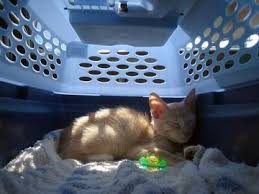
Turn your carrier into a cozy cat hideout.  Getting the cat into a carrier is a big issue for many cat owners, causing a whole lot of stress for  both you and your cat. You can use a cat’s desire to hide to your advantage.  Keep the carrier out in a well used area of the house, such as the living room. Use comfy blankets to create a cozy cave for her to hide in.  Add some toys and she will consider it a great place to be.  If she is reluctant to enter you can use treats or a wand toy to entice her.  You won’t need to chase her around the house every time you need to get to the vet, or worse, totally lose her to hiding and have to cancel your appointment altogether.  This can also reduce stress at vet visits because her safe and relaxing space goes right along with her.

Schedule regular play sessions.  Cats like to have a predictable world.  Most owners do have regular feeding times, but adding in regular playtimes is a great way to help his world be more predictable.  It also increases your chances of playing with him, strengthening your bond.  Remember that your cat does love to interact with you!

Create a warm and cozy spot.  We all know cats like to lounge in a sunny window!  Cats prefer warmer temperatures than we do and since you are not going to keep your house at 80 degrees, you can create a nice spot for your cat by placing blankets or a bed near a source of heat, such as a vent or fireplace.

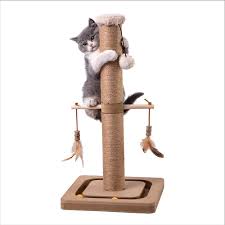
Think vertical.  We tend to set up our living spaces with all the furniture on the floor.  Cats like to climb and can feel safer up high.  Cat trees or shelves or perches up on the walls will create a happy dimension for your friend, as well as provide them with a safe space from which to view the world.

Music!  Putting on some relaxing music, especially while you are out, will help your cat to be less anxious.  Studies show that relaxing music can reduce a cat’s heart rate.

Learn to speak cat.  Cats blink slowly and languidly while they are content and relaxed, if you return the slow blink you are communicating your love back to her in her own language.  Cats accept our slow blinking as a signal to be relaxed in our presence. And increasing your understanding of cat body language can help you to know what your cat needs.

Know how to help your cat if an injury occurs.  Be familiar with pet first aid and CPR so you can be a help to your friend if the worst should occur.  This can not only potentially save your cat’s life, but will increase your confidence and relaxation in an emergency situation.  Keep important phone numbers close by, such as your veterinarian and ASPCA’s Animal Poison Control Center (888-426-4435).

Teach your cat to work with you. Cats are often thought of a being uncooperative or uninterested in working with you.  But this just isn’t true.  Use some yummy treats, petting, or play with a favorite toy to help your cat learn that cooperation can benefit him too.  They can be taught to scratch in appropriate places or to sit on the floor rather than the counter while you prepare food.  

    Filed Under: Cat Behavior, Training, Uncategorized Tagged With: Bonding, Enrichment, safety

    Proper Introductions

    October 23, 2024 by Theresa Berrett

    You have a loving relationship with your sweet kitty, why not increase the love and offer home to another cat or kitten?  Then they could have a friend to play and cuddle with! Suddenly your sweet and relaxed kitty is angry, hissing, and chasing the new cat and possibly even not using the litter box!  What happened there?  Is it possible to add another cat to your household peacefully so everyone gets along?  And what about when two cats who previously did get along suddenly don’t?

    With time and proper introductions, or reintroductions (for the former companions), cats can learn to peacefully get along.  Domestic cats are social and do benefit from companions, but it does require a delicate process to help them start off on the right paw.  Cats do not work things out on their own, as can be a common belief.

    In the case of cats who used to like each other, but suddenly changed, it may take some detective work to discover the cause of the rift.  It could be a matter of something that scared one or both of them and that fear was displaced onto the other cat.  It could be an internal difficulty, emotional or physical, with one cat causing her to not feel good and just needing more space.  It could be a need to change the environment to accommodate the changing social needs of younger cats as they grow.  Maybe one cat had to leave the house for a while and now that she is back, they don’t seem to recognize each other.  There are lots of scenarios that might cause cats to go from companions to combatants.  In order to have a successful reintroduction it may take a veterinary visit and some work to discover, if possible, the cause of the difficulties.  Without removing the problem a reintroduction will not change anything.

    Successful introductions require patience and plenty of time.  Rushing it could cause things to go backwards and become more difficult.  Here are some tips for introducing cats to each other in a safe and happy way.

    What we are going to do here is desensitization, gradually exposing each cat to the other starting with scent.   And counterconditioning, which is pairing something positive such as play or treats with the other cat creating a positive association between them.

    1. Start before bringing the new cat home, or to separate companions who are having a difficult time.  Set up a safe room with all the things a cat needs to keep him comfortable; 2 litter boxes, food and water, a place to hide, a place to climb or play, and new toys.   The litter boxes, food, and water should be placed as far apart from each other as possible. 
    2. Cat’s inhabit a very olfactory world, so first introductions should be through scent.  Use a soft sock (a clean one of yours will have your scent also) on your hand and gently rub one cat, particularly the cheeks and head where his calming pheromones are, just like you are petting him.   Place that sock in the area of the other cat and place some treats near the sock. Do this process again in reverse with another sock for the other cat.  Repeat the process of adding fresh scent for a few days to make sure no one is reacting to the socks.
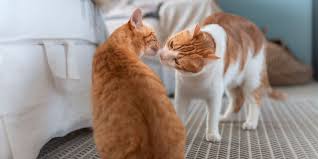
    3. Create a group scent through allogrooming and allorubbing, or hugging and kissing for cats.  Allogrooming and allorubbing are how cats share scent with each other to create a group scent.  Only here you are going to be using a soft brush or sock to share scent between cats.  Again add in the treats to keep the positive connection to the other cat’s scent. Be cautious and slow here, if anyone reacts to the other’s scent, back up a little and give them more time.
    4. Once they are used to each other’s scent, trade places with them for a little time, giving them each a chance to explore the other cat’s “territory”.
    5. Gradually introduce them through sight next.  Start by feeding them on opposite sides of the door.  Once they are relaxed, add in feeding them on opposite sides of a barrier they can see through, such as a baby gate.  You may have to start with them quite a ways away from the barrier at first and then gradually move them closer until they are eating in a relaxed way in close proximity.  Again, if there is any stress by either cat, there is no harm in backing up a few steps and giving them more time.  Eventually, you can remove the barrier and let the cats eat near each other with supervision.
    6. From here it is a good idea to always supervise interactions for a time, but allow the cats to be loose together.  While you are not able to supervise, I would suggest keeping them separate until you are confident they are able to manage together.

    While this seems like a lengthy process, and it really is, it is worth the peace in the household you will have.  Some cats will never become best friends, but they can learn to live comfortably together without conflict.

    Filed Under: Cat Behavior, Training Tagged With: Cat Communication, Introducing cats

    Feline Enrichment and Routine

    October 2, 2024 by Theresa Berrett

    Let’s face it, cats are control freaks.

    They like to know what’s coming and when.  You can help your cat to live his best life by making things predictable and stable for him.  Have you noticed how your cat knows exactly what time dinner is supposed to be?  We all have our internal timers and rhythms. Cats do best when they know what to expect in their world.  Having a basic routine for things like playtime and mealtime and even cuddle time can make them feel comfortable and relaxed.  

    There are some things that you can also add to your cat’s routine for extra enrichment.  Think about how a wild cat’s day might go.  She wakes up and goes on the hunt first thing in the morning (hmm – morning zoomies)  looking for her first meal of the day.  Once she catches that first mouse, eats well, grooms, and then what?  You guessed it! Time for that first nap.  And on her day goes. Predictable and ordered in it’s own way.  And in that order we can find a particular pattern that is excellent enrichment for a cat.  Hunt (play), catch it and eat, groom, nap.  By following a rythym that is natural for a cat you are adding to her wellbeing and health.  Slow feeder toys are a great way to add this enrichment to your cat’s feeding time. And play enhances your bond with them.  Regular play sessions twice a day for  at least 15 minutes before morning and evening meals can go a long way in your cat’s wellbeing and also add to your cat’s physical health because it includes regular exercise.

    Sometimes these patterns can help alleviate other problems.   For example, if your cat regularly wakes you up at night, establish a pattern of rowdy play, food, cuddle time, and then time for everyone to go to bed.  Thought there is another piece to that puzzle. It involves not interaction with your cat during the night at all, not to push them off, not to roll away, just don’t move.  Which, I will warn you ahead of time,  means you may have to ride out a period of time of, sometimes increasing, attempts to get you to interact in the night.  This is  called an extinction burst, where an established behavior will get worse just before it goes away.  We all do this.  If that soda machine doesn’t work this time, we tap, bang, shake until we decide it just isn’t going to work.

    Here are some kitty play tips to help you on your way:

    Any cat, any age can benefit from play and can learn to play.

    If using a wand toy, move the toy in an erratic manner across the floor and over cat trees. Lots of fast movements will catch their eye while periods of slow movement will give your cat a chance to stalk and get ready for the pounce.  Moving the toy around the room away from them can help.  In reality a prey item will rarely come towards a cat.

    Experiment with different types of wand toys.  Some cats prefer feathers, some strips of  material that wiggle like snakes, some like little stuffed toys to grab onto.  Some prefer the wands where the toy is at the tip with a bell, some prefer a wand with a string then the toy.  There are lots of things out there to temp your kitty into play.

    Lot’s of kitties love lazers.  If you have a cat that goes crazy for these, be sure to toss a treat or a favorite toy into the beam now and then so they have a chance to “catch it”, otherwise these can become frustrating to some.

    Try the interactive cat  toys that move on their own.  Some cats love these, but be cautious with your introduction, some are afraid of the noises or movements.

    Some cat’s will play fetch or hide and seek under a blanket.  One for mine likes when I pull her around the wood floor on a banket while she attacks the wrinkles.  You may even come with others all your own.

    And lastly,  never play with your cat with your hands.  This might seem cute and harmless with a kitten, but can cause bigger scratches later on.  It also teaches your cat that attacking you is an acceptable way to play.

    Filed Under: Cat Behavior, Training Tagged With: Enrichment, Play, Routine

    • « Go to Previous Page
    • Page 1
    • Page 2
    • Page 3
    • Page 4
    • Page 5
    • Page 6
    • Page 7
    • Go to Next Page »

    Primary Sidebar

    Recent Posts

    • Come and see me at:
    • End of our Dog Days of Summer Reminders
    • Common Causes of Behavior Issues in Cats
    • June Highlights the Importance of Pet Safety, Preparedness & Compassion for Animals
    • Announcing…

    Recent Comments

    No comments to show.

    Content

    Our team will teach you the art of writing audience-focused content that will help you achieve the success you truly deserve.

    Learn more about content.

    Design

    With an emphasis on typography, white space, and mobile-optimized design, your website will look absolutely breathtaking.

    Learn more about design.

    Strategy

    We help creative entrepreneurs build their digital business by focusing on three key elements of a successful online platform.

    Learn more about strategy.

    Archives

    • August 2026
    • July 2026
    • June 2026
    • February 2026
    • August 2025
    • July 2025
    • June 2025
    • May 2025
    • March 2025
    • February 2025
    • January 2025
    • December 2024
    • November 2024
    • October 2024
    • September 2024
    • August 2024
    • July 2024
    • June 2024
    • May 2024
    • January 2024
    • October 2023

    Categories

    • Cat Behavior
    • Dante's Paradise
    • Pet First Aid
    • Training
    • Uncategorized

    Footer

    Design

    With an emphasis on typography, white space, and mobile-optimized design, your website will look absolutely breathtaking.

    Learn more about design.

    Content

    Our team will teach you the art of writing audience-focused content that will help you achieve the success you truly deserve.

    Learn more about content.

    Strategy

    We help creative entrepreneurs build their digital business by focusing on three key elements of a successful online platform.

    Learn more about strategy.

    Copyright Creature Comforts Pet Services, 2024