• Skip to primary navigation
  • Skip to main content
  • Skip to primary sidebar
  • Skip to footer
Creature Comforts Pet Services, LLC

Creature Comforts Pet Services, LLC

Compassionate care for your friend

  • Home
  • Services +
    • Cat Hotel
    • Feline Behavior
    • Pet Sitting
    • Dog Walking
    • Pet CPCR and First Aid
  • Creature Comforts Blog
  • About
  • Contact
  • Resources
  • Pet Sitting

Cat Behavior

Target Train your Cat

July 23, 2025 by Theresa Berrett

Training can be excellent mental stimulation for any cat and it is really simple to get started.  Cats are prey as well as predator, because of this they do not respond well to punishment based training.  Positive reinforcement training with cats can improve your relationship with your cat, create a common communication between you, and prevent many behavior problems. Clicker training uses a marker (the click) to let your cat know the exact moment they have done something that earns a treat.  It makes the communication clear and precise which helps to reduce any confusion or frustration on the part of your cat.  It also requires very little time, but results in huge benefits.

Charge the Clicker

The first step in clicker training is to make a positive connection between the click and reinforcement.  This may take a little investigation on your part to discover what your cat considers reinforcing.  It can be treats, play with a favorite toy, or even brushing.  

Once you know what they like, spend a few minutes with your cat just click and then reinforce a few times in a row.  It really doesn’t take long before your cat makes the connection then you are ready to click for your first behavior.

Troubleshooting

Some cats are afraid of the clicker. No problem, use a ball point pen, which is quieter, or you can click with your mouth.

If your cat loses interest after just a few attempts, that is ok.  Remember that they don’t yet know what you are up to.  You may have to try a treat or reinforcement that is more exciting to your cat to get their interest.

And, keep in mind, a training session for a cat should really only last 2-3 minutes.  

If you feel frustrated at all there is nothing wrong with stopping and trying again another time.

Target Training

A good first behavior is to teach your cat to touch a target with their nose.  This can be later used in all sorts of other ways, such as to lead your cat into doing a spin.

You will need:

-A clicker

-a stick with a target on the end (think pencil or chopstick with a ping pong ball)

-reinforcements

Hold the target about 1 inch in front of your cat’s nose, most cats will reach forward to sniff the target, when they do click as they touch it and give them a treat.  If your cat does not sniff the target, move it slightly closer so he almost has to touch it, then click and treat. Even if you only get a small glance toward the target you can click and treat for that. You are giving him the idea that you want him to do something with the target and any interaction with it will earn him a treat.

Give him an opportunity to touch the target right away again, then click and treat.

Between each time put the target behind you back, so you get a new opportunity to present the target to your cat each time as the cue to touch the target.

Once he is touching the target consistently, try moving it a few inches to allow him to move forward toward it.  You can progress slowly to larger distances or even teaching him to follow the target little by little.

And there you have it! Congratulations! You have just trained your first behavior!

Filed Under: Cat Behavior, Training Tagged With: Cat Communication, Enrichment

Hyperarousal in Cats

July 2, 2025 by Theresa Berrett

Have you ever had the feeling of crawling out of your own skin?  Our cats can have this feeling too, called hyperarousal, or overstimulation, and it can manifest in many ways, but often indicates the need for some attention to their physical or emotional wellbeing.  Some behavioral signs you might see in a cat that is overstimulated are sudden bursts of hyperactivity (“zoomies”), increased aggression or fearfulness, hiding, hissing, dilated pupils, tense body language, fur standing on end.  There can also be physical signs such as scratching or biting at themselves (especially the tail or lower back), skin twitching or rippling, dilated pupils.  They might also excessively meow, yowl, scream or growl, as well as drooling or inappropriate urination.  Knowing the signs can help you be alerted to the escalation of behavior.

Where does it come from?  

Certain breeds are more predisposed to hyperarousal, such as siamese, Abyssinians, and Persians.  Causes can vary from stress and anxiety due to the environment, or insufficient mental and physical stimulation.  Overstimulation such as excessive petting, loud noises, intense play or strong scents that can overwhelm a cat’s senses. Sometimes medical conditions can contribute and this is always the first place to start any investigation of behavioral problems or changes in cats.

Here are some things you can do to help your feline friend:

Consult with your veterinarian to rule out any underlying medical conditions and discuss appropriate treatment options, which may include medication or behavioral modification strategies. 

Identify and minimize the situations that cause your cat to become overstimulated or anxious. This could involve providing quiet spaces, avoiding excessive petting, or gradually introducing new things.

Consider some environmental enrichment: Offer plenty of toys, scratching posts, climbing structures, and mental stimulation like puzzle feeders to help your cat channel their energy constructively and reduce boredom.  Regular play sessions can help to keep your pet feeling good and healthy, as well as be a way to expend extra energy.  Remember that we are their whole world and it is up to us humans to provide a life as enriching as their wild counterparts have.

Establish a Routine: Maintain consistent feeding times, play sessions, and bedtime routines to provide a sense of security and predictability.  Keep stability in mind whenever a change needs to happen whether it be a move to a new house or change in your work schedule, make the change gradually.

Consider Calming Aids: Feliway diffusers or sprays and calming music may help some cats relax. However, the effectiveness of these products can vary.

What to do with a cat that is already overstimulated?

When your cat is showing signs of hyperarousal, the first step to take is to stop the interaction or remove the cause of the overstimulation. This may include ending a petting session, stopping play, turning off household appliances, or dimming the lights.  Place your cat in a quiet, private location until they calm down. This space should have food and water bowls, perches, a litter box, and a bed to allow them to decompress. Most cats need anywhere from a few minutes to several hours to reset after they have become overstimulated.  If you have a cat that regularly reaches a high state or arousal, have a quiet space with everything they need set up ahead of time that she is already comfortable in.

Filed Under: Cat Behavior, Training Tagged With: hyperarousal, Overstimulation, zoomies

Fun Things to do with Your Kitten

June 8, 2025 by Theresa Berrett

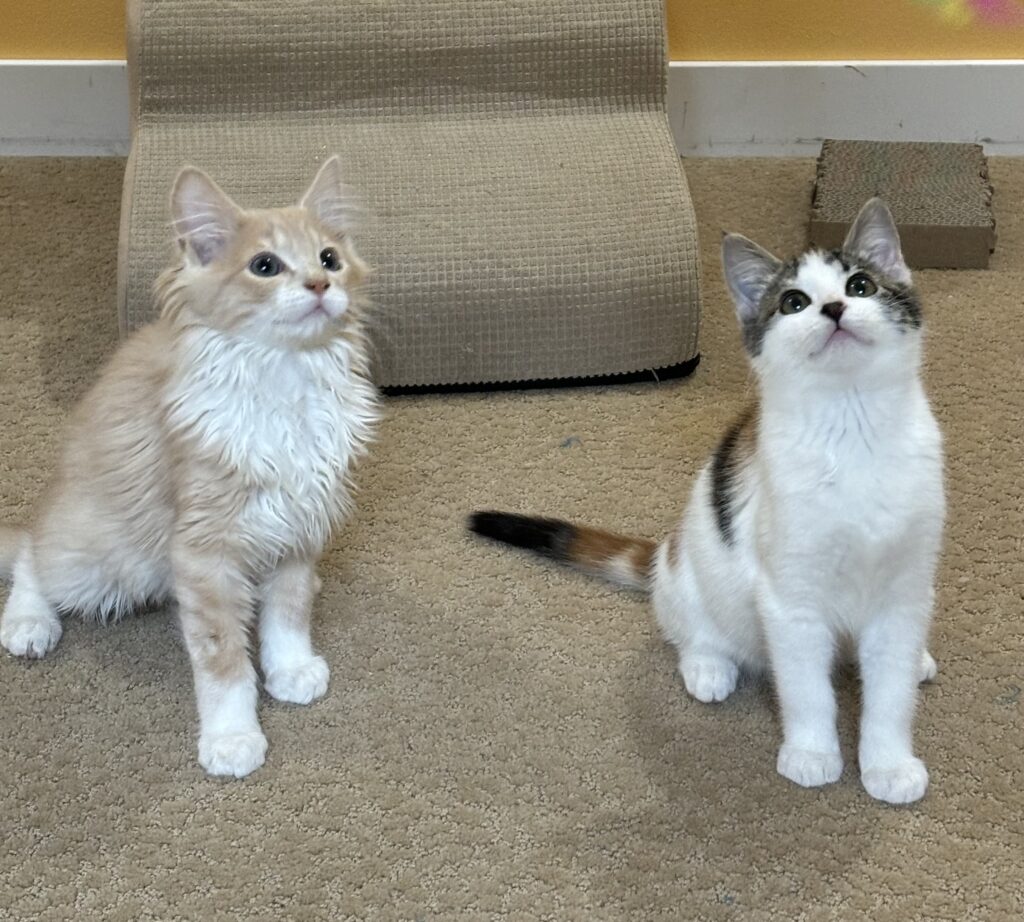
Kitten season is upon us! Here are some ideas to help your kitten get started right.

Great Kitten Treats

Chicken baby food, Squeeze cheese, or kitten food (you can feed these off of a popsicle stick or out of a needleless syringe)

Churu

Small pieces of chicken or cheese ( tiny really, the idea is to give them the smallest piece they still perceive as a treat)

Kitten treats, although a lot of time these are pretty big for a quick treat while handling.

Experiment and see what your kitten likes best.

Pair these activities with some yummy treats to create a happy association and you and your cat will benefit from the reduced stress involved in necessary care.

Timing is important!  You want to treat WHILE handling because that is the place where you want them to associate a good experience.

Short frequent sessions of practice handling are best.

Basic Handling

Have fun with this one (while still being very gentle!):  

Hold your kitten like you don’t know what you are doing.   The idea is to get them used to being held just about any way, so if they do encounter someone who doesn’t know, it is still comfortable.  The trick here is to hold them in various ways and give treats, but don’t hold them so long they begin to struggle.  Just get them used to the idea that they can relax and be handled.  

Some ideas:

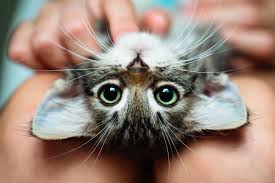
Have them lie on your lap on their back. (Good for nail clipping later on.)

Hold them up and try to examine different parts, just as a veterinarian might have to some day.

Handle legs, paws, tail, ears, belly, etc.

Lift their lips and look at their teeth.

Teach them to allow you to look in their mouth. You can encourage this with treats.

Extend claws and look between the toes.

Crate Training and Cars

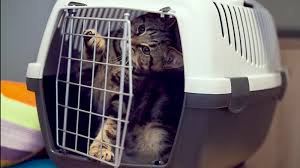
Keep your carrier open and available as a fun hiding spot.

Use treats or toys to make it a great place to hangout and relax.

You can also feed meals inside the carrier and briefly close the door while eating.

Once kitty is comfortable in the carrier, you can do short walking trips around the house to get him used to the movement.
Then add in going out to the car, sitting in the car…

The idea is small steps and pairing everything with treats, creating that happy association with travel.

Pill popper or syringe

Make a pill out of a treat and use a pill popper to deliver it.  Do the same with a liquid treat in a syringe and later they will look forward to getting medicine!

Nail trimming

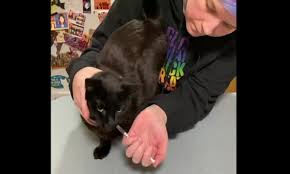
Start with gently handling paws and extending claws.  It can help if they learn to be comfortable lying on their back on your lap. (See above)

Gently touch each nail with the clippers working up to clipping one nail at a time while pairing each clip with a treat.  If the sound of the clip seems scary to your cat, try sitting quietly with your kitten and giving lots of treats while clipping a dried piece of spaghetti with the clippers.  

Veterinary skills

Ask your veterinarian if you can do some friendly visits where you just stop on a few times for yummy treats.  This can help them to get used to the smells, sounds, and sights of the vet’s office so it is not a scary experience later on.  This is why we have a kitten kindergarten class in the veterinary setting.

Use a needless syringe to do mock vaccinations.  Gently hold up a portion of the skin and press the syringe there, again while pairing with treats.

Get them standing on a small scale enjoying treats.

Stand on a table comfortably. Remember here to use a towel or blanket so the table is comfortable and not slippery.

Practice with a stethoscope, otoscope, etc.  All while enjoying those great treats.

Other people and animals

Have friends over and encourage them to feed treats and play with your kitten.

If you have access to a calm and friendly dog, introduce them to your kitten.  Starting on opposite sides of a door, to get used to the smell of each other, then through a baby gate. If there are no big reactions on the part of either animal, be cautious and keep the dog on a leash while they are allowed to interact.

This can be done with other animals too.  If you like to keep small animals, introducing your kitten to a rabbit, rat, or bird will help keep everyone safe later on.  ALthough it is never a good idea to leave cats unattended with “prey” animals, they can act on instinct and cause injury even when carefully introduced.

Harness Training

This is a great idea to extend the world safely for indoor kittens.

You can use treats as a lure to get your kitten to put her own head through the harness and accept the harness being clipped.  

Have some short play sessions with just the harness on and let her get comfortable with the feel of it.  

Later attach a ribbon or string so she can get used to a lighter “leash” dragging behind.  Add the leash as she gets more relaxed and then short trips outdoors.  Keep it to small short trips to quiet places. 

Lastly, always carry your indoor kitty over the door threshold, so she does not learn to walk out on her own.  This can help prevent darting out the door.

Positive Play Techniques

Keep your hands out of the mix!  It may be cute and fun to wrestle with your hand with a kitten, but that can turn to not so fun when they grow up.  It is a good idea to avoid play that involves any part of your body.  (Think: Adult cat launching onto your head!)

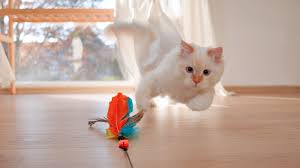
Use a wand toy, move the toy in an erratic manner across the floor and over cat trees. Lots of fast movements will catch their eye while periods of slow movement will give your cat a chance to stalk and get ready for the pounce.  Moving the toy around the room away from them can help.  In reality a prey item will rarely move towards a cat.

Experiment with different types of wand toys.  Some cats prefer feathers, some strips of  material that wiggle like snakes, some like little stuffed toys to grab onto.  Some prefer the wands where the toy is at the tip with a bell, some prefer a wand with a string then the toy.  There are lots of things out there to tempt your kitty into play.

Lots of kitties love lasers.  If you have a cat that goes crazy for these, be sure to toss a treat or a favorite toy into the beam now and then so they have a chance to “catch it”, otherwise these can become frustrating to some.

Try the interactive cat  toys that move on their own.  Some cats love these, but be cautious with your introduction, some are afraid of the noises or movements.  It is also important to not let these take over play altogether and miss the bonding experience with you.

Some cat’s will play fetch or hide and seek under a blanket.  One for mine likes when I pull her around the wood floor on a blanket while she attacks the wrinkles.  You may even come with others all your own.

And lastly, remember:

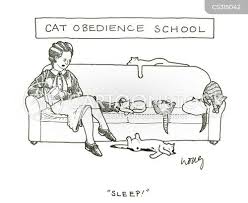
Cats can be trained!

Working things like sit and other doggy tricks can add to your kitten’s stimulation.

I highly recommend clicker training with cats because it is positive reinforcement based and will serve to strengthen your bond with your kitten while also giving your cat a means of communication with you.

Filed Under: Cat Behavior, Training Tagged With: Cat development, kitten kindergarten

Kitten Acclimation

March 29, 2025 by Theresa Berrett

The best time to get a kitten used to new and different experiences and places is between 2 and 10 weeks of age.  Never fear if you have an older kitten!  It is still possible, but 2-10 weeks is just the easiest time because they have not created associations with new experiences and are more curious and accepting of novel stimuli.  This early exposure to a variety of situations, people, places and other pets, paired with positive reinforcement, will help to create a cat who is less stressed and more resilient in novel situations.  It can also help to prevent behavior problems later on which are commonly related to stress.

Here are some potential new ideas for your kitten:

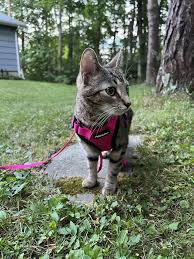
Walking on a harness outdoors

This can greatly expand your kitten’s perceived home range, as well as give her mastery over their territory.  It can help to prevent common behavior problems by using up extra energy and increasing mental stimulation. 

Handle your kitten in a variety of ways

Pair lifting and handling your kitten with treats or favorite toys can create a positive experience with being handled.  Handle all parts of their body such as toes, tail, belly, and even lifting up lips to look at teeth.  While you don’t want to stress your kitten, gently handling in a variety of ways can help reduce stress around future grooming and veterinary handling as well as prevent fear if your cat is picked up in an awkward way by another person.

Brushing and grooming

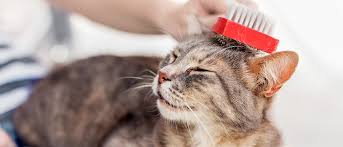
Introducing your kitten to brushing, brushing teeth, and nail clipping early can help make these go much more smoothly later in life.  Brushing can also be a good bonding experience for you and your cat.  You can also help with giving medication in future by giving liquid treats in a syringe and using a pill popper to give a soft treat.

Carrier or crate

You know how much cats love paper bags to play in? Well your carrier can be the same fun cave-like experience. Set your carrier with a blanket and toys as a fun place to hang out and rest or play. Toss treats into the carrier and create a positive connection to entering the carrier young. This can alleviate a whole lot of the common stress around travel and veterinary visits.

Take trips to visit the veterinary office and/ or groomer

Just a short drop in to the vet’s office to get used to the sights and smells paired with threats can go a long ways toward reducing everyone’s stress around visiting the vet.  Many cats do not get adequate veterinary care because getting a cat to the vet and the stress involved in being at the vet can be so high.

Introductions to a variety of people and (cat friendly!) pets

The more variety the better!  Adults, children, beards, and hats, dogs and cats!  Cats benefit from socialization in the same ways as dogs making them more adaptable to change later on.  Introducing your kitten to other cats or kittens can help in adding another cat to the family later on.

Filed Under: Cat Behavior, Training Tagged With: Cat development, Enrichment, kitten acclimation, kitten kindergarten

How Cats Learn

February 24, 2025 by Theresa Berrett

Cats are thought of as self-sufficient, making them a good fit for people who work longer hours or live in smaller homes.  But because of this pervasive belief that cats are independent, it is a common misconception that cats cannot be trained or do not need training. Many times if a cat has a behavioral problem, owners will accept it as a cat being a cat and make no effort to correct the issue.  More often than not cats will be surrendered to shelters instead of addressing a behavior problem.  It is not only possible to train cats, but it can be beneficial to both cat and owner.  Training can help to solve behavior problems that are not always fun to live with, increase your bond with your cat, and help increase mental stimulation and enrichment making a happier cat (resulting in less future behavior problems!)

An innate behavior occurs when an animal exhibits instinctive behavior, such as a cat chasing something moving quickly across the floor like a mouse.  These are built in behaviors.

A learned behavior, on the other hand, is either a change to existing behavior or the creation of a new behavior.  Cats learn from a number of different sources.  They can learn from other cats.  Kittens will engage in similar behaviors to learn behaviors that can contribute to greater survival and success.  Group behaviors, or allelomimetic behaviors, are when two or more animals engage in a behavior at the same time.  Animals in a social group will follow one another’s example, such as when littermates investigate a new area together.  

Observational learning is when animals learn by watching one another.  They do not need to engage in the behavior to learn from one another.  Cats are notorious for learning this way, hence the saying copy cat.  They can learn both what to do, such as meow for a treat, and what not to do, such as jump in the sink and get wet.  

Cats also learn how to develop hunting skills through play, as well as communication with one another.  This is one way they can learn physical limitations and how rough to play with another.

Single, traumatic experiences can result in lifelong phobias in a phenomena known as single event learning.  This commonly occurs between 4 and 11 months of age, but can occur at any time if the event is influential enough.  For example, a loud buzzer from the dryer while a kitten is sitting on or near it could cause the kitten never to go near the dryer again.  These behavioral issues can be resolved through desensitization and counter conditioning.

Filed Under: Cat Behavior, Training Tagged With: how cats learn

Litter Box Solutions

January 22, 2025 by Theresa Berrett

There are a lot of ways to prevent and solve litter box problems with cats. Unfortunately, these often easily solvable problems are the number one reason for surrendering a cat.  You don’t have to give up your sweet friend! Here are some ways to keep your cat in the box.

First and foremost is a vet visit.  

Most litter box issues are actually caused by medical issues,. such as a urinary tract infection, and will clear up on their own once the medical issue is taken care of.  If you notice any box issues, it is a good idea to visit the vet right away in case this is the reason before not using the box becomes a habit.  Sometimes older cats will pee outside the box edge because arthritis prevents them from squatting all the way.

Number of boxes

The minimum number of boxes to have are 1 per cat plus one extra.  So if you have 1 cat your need 2 boxes, for 2 cats you need 3 boxes, etc.  Many cats actually prefer to defecate and urinate in different places and a number of boxes can prevent anyone from guarding all the boxes.

Placement of boxes

Boxes should be in easily accessible spots.  You and I would not like to have to go all the way to the basement or out in the cold garage for the bathroom, neither do our feline friends.  Placement in a relatively quiet, non high traffic area is ideal.  If you have more than one floor, one box per floor is a good idea.  Spreading the boxes out in different areas will help your kitty to have access more easily. We all know how it is when we really need to go right away!  For multiple cats (or another pet such as a dog), it is best to make sure the box is not in a place where kitty could get startled and feel trapped, like the back of a closet. Putting the boxes in places where one cat cannot guard them all helps with multiple cats too.

Type of box

There are a lot of varieties of boxes out on the market now.  Ideally,  you want a box that is at least 1 ½ times the length of your cat.  Honestly, my favorite boxes are bins for mixing cement that you can get in the hardware store.  They are large and deep enough to keep most of the litter in.  Keep in mind, though, older cats may need a lower side as an entrance. Many cats do not like boxes with lids because they can feel like they are trapped.  Complicated boxes and litter robots are not recommended because of how difficult they can be to clean well and some discourage use because of the noises they make. This is a place where experimentation with your cat’s preferences is a good plan.  Just like us they are all individuals with different ideas of what they like.

Type of litter 

Most cats do prefer unscented clay litter.  The more sand-like the better.  Scented litters overwhelm a cat’s sensitive nose and can discourage litter box use.  Some cats will ingest litter made from corn or wheat, so it is a good idea to watch carefully the first time you use these types of litter.  Again this is a place where some experimentation is a good idea to see what works best for both you and your cat.

Keeping it clean

Just like we don’t like to use a dirty port-a-potty, cats don’t like to use a dirty box.  Scooping at least once a day and a once a week complete litter change and washing the box with just dish soap and water is best.  Letting the box dry in the sun can help keep it smelling fresh. Using something stronger, such as bleach can bother your kitty’s sensitive nose.  

For accidents

If your cat does miss the box, use an enzyme cleaning specific to cats to clean it up.  Some cats will continue to use a spot that smells, so it is important to clean up any messes thoroughly.   I like to use disposable pee pads under my boxes, just in case someone does miss, it is easy to clean up completely.

Filed Under: Cat Behavior Tagged With: litter boxes

  • Page 1
  • Page 2
  • Page 3
  • Page 4
  • Go to Next Page »

Primary Sidebar

Recent Posts

  • Back to School Safety Tips 
  • Target Train your Cat
  • Hyperarousal in Cats
  • Cat Poetry
  • Fun Things to do with Your Kitten

Recent Comments

No comments to show.

Content

Our team will teach you the art of writing audience-focused content that will help you achieve the success you truly deserve.

Learn more about content.

Design

With an emphasis on typography, white space, and mobile-optimized design, your website will look absolutely breathtaking.

Learn more about design.

Strategy

We help creative entrepreneurs build their digital business by focusing on three key elements of a successful online platform.

Learn more about strategy.

Archives

  • August 2025
  • July 2025
  • June 2025
  • May 2025
  • March 2025
  • February 2025
  • January 2025
  • December 2024
  • November 2024
  • October 2024
  • September 2024
  • August 2024
  • July 2024
  • June 2024
  • May 2024
  • January 2024
  • October 2023

Categories

  • Cat Behavior
  • Pet First Aid
  • Training
  • Uncategorized

Footer

Design

With an emphasis on typography, white space, and mobile-optimized design, your website will look absolutely breathtaking.

Learn more about design.

Content

Our team will teach you the art of writing audience-focused content that will help you achieve the success you truly deserve.

Learn more about content.

Strategy

We help creative entrepreneurs build their digital business by focusing on three key elements of a successful online platform.

Learn more about strategy.

Copyright Creature Comforts Pet Services, 2024