• Skip to primary navigation
  • Skip to main content
  • Skip to primary sidebar
  • Skip to footer
Creature Comforts Pet Services, LLC

Creature Comforts Pet Services, LLC

Compassionate care for your friend

  • Home
  • Services +
    • Cat Hotel
    • Feline Behavior
    • Pet Sitting
    • Dog Walking
    • Pet CPCR and First Aid
  • Creature Comforts Blog
  • About
  • Contact
  • Resources
  • Pet Sitting

Theresa Berrett

What you can expect from Creature Comforts Pet sitting and Dog Walking Services

May 31, 2025 by Theresa Berrett

There are a lot of bigger companies out there offering pet sitting and dog walking services.  The reality behind those companies is that while they have the means to advertise a smaller company like mine right out of the water they just aren’t personal.  There is little to no vetting of their sitters as far as safety or knowledge of animals and no real accountability.  They take a percentage of the sitter’s rate making it unlikely that the sitters are able to fully dedicate their time to just your pets because they need to do other work in order to make a living.

At Creature Comforts, I am dedicated to the animals I work with.  I got started because of my love of animals and that has never left me.  I do focus on professionalism and good business practices, but that is not the reason I do this.  Here are some of the things you can expect from my experience and dedication to you and your pets.

  • I always give more than the full time to each visit and walk.
  • I aim to follow your pet’s normal routine to the best of my ability.  It can help ease stress and anxiety to keep routines familiar.
  • I administer medication with the least possible invasive methods, And have lots of patience, kindness, and experience with animal behavior and how to handle gently.
  • I do my utmost to comfort, love, and show kindness towards an animal who is probably missing their person and whose world is a little disturbed. 
  • I keep in close touch with you, for your peace of mind.
  • I can provide a background check if requested so you can rest easy that your home is safe.
  • I keep current Liability and Care, Custody, and Control insurance in case things do not go as planned.
  • I have many years of hands-on experience with many different types of animals and situations that could happen. 
  • I maintain and update an emergency plan in case something were to happen to me. I have done everything in my power to make sure to have a system in place so that animals will get taken care of no matter what.
  • I maintain and update a disaster preparedness plan for how to keep animals safe and cared for.
  • Safety is topmost priority while walking dogs. I do not allow them to interact with other dogs because only you know your dog best and can judge if the situation is safe.
  • I keep up-to-date on the latest practices of good animal care, health, and training and am always happy to share my knowledge with you.
  • Above all, instead of getting caught up in the business and money side of things, I keep one thing in mind.  The reason I do this is my love of animals and that is the most important thing you can expect from my business – Compassionate care for your best friend.

Filed Under: Uncategorized Tagged With: reliable, safety

Kitten Acclimation

March 29, 2025 by Theresa Berrett

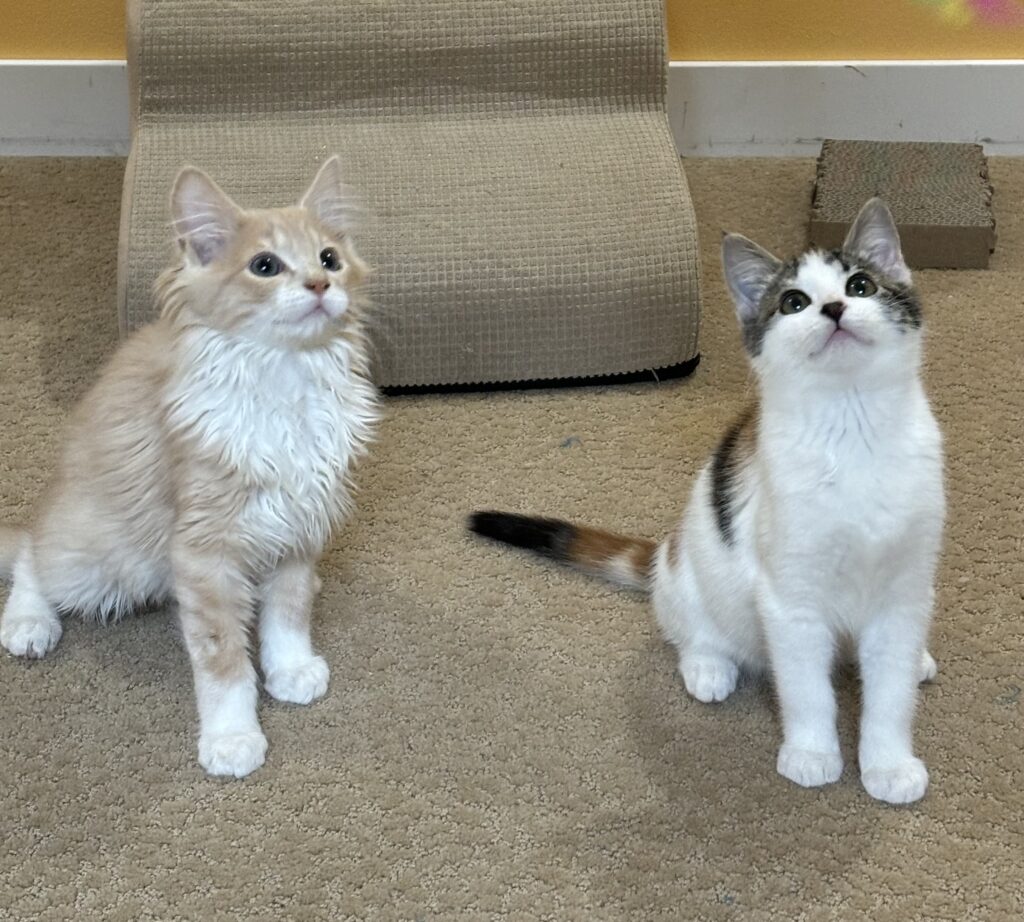
The best time to get a kitten used to new and different experiences and places is between 2 and 10 weeks of age.  Never fear if you have an older kitten!  It is still possible, but 2-10 weeks is just the easiest time because they have not created associations with new experiences and are more curious and accepting of novel stimuli.  This early exposure to a variety of situations, people, places and other pets, paired with positive reinforcement, will help to create a cat who is less stressed and more resilient in novel situations.  It can also help to prevent behavior problems later on which are commonly related to stress.

Here are some potential new ideas for your kitten:

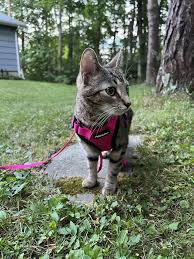
Walking on a harness outdoors

This can greatly expand your kitten’s perceived home range, as well as give her mastery over their territory.  It can help to prevent common behavior problems by using up extra energy and increasing mental stimulation. 

Handle your kitten in a variety of ways

Pair lifting and handling your kitten with treats or favorite toys can create a positive experience with being handled.  Handle all parts of their body such as toes, tail, belly, and even lifting up lips to look at teeth.  While you don’t want to stress your kitten, gently handling in a variety of ways can help reduce stress around future grooming and veterinary handling as well as prevent fear if your cat is picked up in an awkward way by another person.

Brushing and grooming

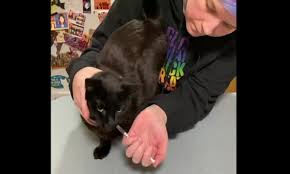
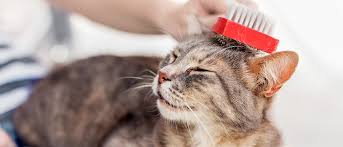
Introducing your kitten to brushing, brushing teeth, and nail clipping early can help make these go much more smoothly later in life.  Brushing can also be a good bonding experience for you and your cat.  You can also help with giving medication in future by giving liquid treats in a syringe and using a pill popper to give a soft treat.

Carrier or crate

You know how much cats love paper bags to play in? Well your carrier can be the same fun cave-like experience. Set your carrier with a blanket and toys as a fun place to hang out and rest or play. Toss treats into the carrier and create a positive connection to entering the carrier young. This can alleviate a whole lot of the common stress around travel and veterinary visits.

Take trips to visit the veterinary office and/ or groomer

Just a short drop in to the vet’s office to get used to the sights and smells paired with threats can go a long ways toward reducing everyone’s stress around visiting the vet.  Many cats do not get adequate veterinary care because getting a cat to the vet and the stress involved in being at the vet can be so high.

Introductions to a variety of people and (cat friendly!) pets

The more variety the better!  Adults, children, beards, and hats, dogs and cats!  Cats benefit from socialization in the same ways as dogs making them more adaptable to change later on.  Introducing your kitten to other cats or kittens can help in adding another cat to the family later on.

Filed Under: Cat Behavior, Training Tagged With: Cat development, Enrichment, kitten acclimation, kitten kindergarten

What is Cooperative care?

March 9, 2025 by Theresa Berrett

Cooperative care training teaches animals to be active participants in their care both at home and at the veterinary office, rather than just tolerating procedures. This training builds trust and reduces stress for both the dog and the handler. 

The focus is on positive reinforcement using praise and rewards to encourage animals to participate and have an enjoyable experience. This type of training creates communication with your pet to allow them to be able to let you know when they are willing to opt in or out of certain behaviors.  This choice allows the animals to have control over difficult situations and can help to increase their confidence, trust, and willingness to participate.  There is no need to force your pet to participate because you can listen to them.  This greatly reduces stress for the animal around husbandry and veterinary care.  Giving animals choices actually can help to get the desired behavior faster than forcing things and reduces the risk of injury to both the handler and animal. 

It works by breaking bigger behaviors down into small steps to make it easier for your pet can learn them more easily.  Some examples of cooperative care behaviors are

  • Standing still for grooming or examination.
  • Offering a paw for nail trims
  • Taking medication
  • Entering and exiting a carrier easily
  • Ear cleaning
  • Toothbrushing

Working with pets young can help establish a healthy, happy, and stress free relationship with veterinary care and husbandry. Creature Comforts offers both kitten and puppy cooperative care training and has partnered with Chimacum Valley Vet and Pet Townsend to create positive experiences in a veterinary setting. Call 360-643-1323 to get your pet started on the right paw.

Filed Under: Training

How Cats Learn

February 24, 2025 by Theresa Berrett

Cats are thought of as self-sufficient, making them a good fit for people who work longer hours or live in smaller homes.  But because of this pervasive belief that cats are independent, it is a common misconception that cats cannot be trained or do not need training. Many times if a cat has a behavioral problem, owners will accept it as a cat being a cat and make no effort to correct the issue.  More often than not cats will be surrendered to shelters instead of addressing a behavior problem.  It is not only possible to train cats, but it can be beneficial to both cat and owner.  Training can help to solve behavior problems that are not always fun to live with, increase your bond with your cat, and help increase mental stimulation and enrichment making a happier cat (resulting in less future behavior problems!)

An innate behavior occurs when an animal exhibits instinctive behavior, such as a cat chasing something moving quickly across the floor like a mouse.  These are built in behaviors.

A learned behavior, on the other hand, is either a change to existing behavior or the creation of a new behavior.  Cats learn from a number of different sources.  They can learn from other cats.  Kittens will engage in similar behaviors to learn behaviors that can contribute to greater survival and success.  Group behaviors, or allelomimetic behaviors, are when two or more animals engage in a behavior at the same time.  Animals in a social group will follow one another’s example, such as when littermates investigate a new area together.  

Observational learning is when animals learn by watching one another.  They do not need to engage in the behavior to learn from one another.  Cats are notorious for learning this way, hence the saying copy cat.  They can learn both what to do, such as meow for a treat, and what not to do, such as jump in the sink and get wet.  

Cats also learn how to develop hunting skills through play, as well as communication with one another.  This is one way they can learn physical limitations and how rough to play with another.

Single, traumatic experiences can result in lifelong phobias in a phenomena known as single event learning.  This commonly occurs between 4 and 11 months of age, but can occur at any time if the event is influential enough.  For example, a loud buzzer from the dryer while a kitten is sitting on or near it could cause the kitten never to go near the dryer again.  These behavioral issues can be resolved through desensitization and counter conditioning.

Filed Under: Cat Behavior, Training Tagged With: how cats learn

Litter Box Solutions

January 22, 2025 by Theresa Berrett

There are a lot of ways to prevent and solve litter box problems with cats. Unfortunately, these often easily solvable problems are the number one reason for surrendering a cat.  You don’t have to give up your sweet friend! Here are some ways to keep your cat in the box.

First and foremost is a vet visit.  

Most litter box issues are actually caused by medical issues,. such as a urinary tract infection, and will clear up on their own once the medical issue is taken care of.  If you notice any box issues, it is a good idea to visit the vet right away in case this is the reason before not using the box becomes a habit.  Sometimes older cats will pee outside the box edge because arthritis prevents them from squatting all the way.

Number of boxes

The minimum number of boxes to have are 1 per cat plus one extra.  So if you have 1 cat your need 2 boxes, for 2 cats you need 3 boxes, etc.  Many cats actually prefer to defecate and urinate in different places and a number of boxes can prevent anyone from guarding all the boxes.

Placement of boxes

Boxes should be in easily accessible spots.  You and I would not like to have to go all the way to the basement or out in the cold garage for the bathroom, neither do our feline friends.  Placement in a relatively quiet, non high traffic area is ideal.  If you have more than one floor, one box per floor is a good idea.  Spreading the boxes out in different areas will help your kitty to have access more easily. We all know how it is when we really need to go right away!  For multiple cats (or another pet such as a dog), it is best to make sure the box is not in a place where kitty could get startled and feel trapped, like the back of a closet. Putting the boxes in places where one cat cannot guard them all helps with multiple cats too.

Type of box

There are a lot of varieties of boxes out on the market now.  Ideally,  you want a box that is at least 1 ½ times the length of your cat.  Honestly, my favorite boxes are bins for mixing cement that you can get in the hardware store.  They are large and deep enough to keep most of the litter in.  Keep in mind, though, older cats may need a lower side as an entrance. Many cats do not like boxes with lids because they can feel like they are trapped.  Complicated boxes and litter robots are not recommended because of how difficult they can be to clean well and some discourage use because of the noises they make. This is a place where experimentation with your cat’s preferences is a good plan.  Just like us they are all individuals with different ideas of what they like.

Type of litter 

Most cats do prefer unscented clay litter.  The more sand-like the better.  Scented litters overwhelm a cat’s sensitive nose and can discourage litter box use.  Some cats will ingest litter made from corn or wheat, so it is a good idea to watch carefully the first time you use these types of litter.  Again this is a place where some experimentation is a good idea to see what works best for both you and your cat.

Keeping it clean

Just like we don’t like to use a dirty port-a-potty, cats don’t like to use a dirty box.  Scooping at least once a day and a once a week complete litter change and washing the box with just dish soap and water is best.  Letting the box dry in the sun can help keep it smelling fresh. Using something stronger, such as bleach can bother your kitty’s sensitive nose.  

For accidents

If your cat does miss the box, use an enzyme cleaning specific to cats to clean it up.  Some cats will continue to use a spot that smells, so it is important to clean up any messes thoroughly.   I like to use disposable pee pads under my boxes, just in case someone does miss, it is easy to clean up completely.

Filed Under: Cat Behavior Tagged With: litter boxes

Answer Your Cat’s Question Day

January 14, 2025 by Theresa Berrett

More than 600 million cats share the planet with us, and although we have cohabitated for close to 12,000 years, cats and humans don’t always understand each other.  Researchers at Tufts University School of Veterinary Medicine say that a cat’s brain is more similar to the human brain than to a dog’s brain, yet feline behavior can be baffling.    

In celebration of Answer Your Cat’s Question Day (January 22nd), take a little more time than usual to tune in and connect with your favorite kitty cat.  You may uncover a question or two she has been dying to know the answer to, and in the process, you may unlock some of her puzzling behavior. 

  1. Why do you keep on petting even when I have had enough? 

Snowball is purring and you are enjoying the touch of her soft silky fur against your fingertips.  Suddenly, hyper-dermic-like teeth penetrate your arm!  A love-bite?  Maybe, but some behavior experts refer to this as petting-induced aggression and Snowball’s response is simple, “I’ve been annoyed by your constant petting and you didn’t stop.”  Although your canine pal may let you continue on and on and on with a belly rub, cats are not small dogs.  They are different creatures altogether, and the non-stop pressure on their tender bodies has its limits.  Pay attention.  Your cat will give you signals:  flattened ears, whiskers pulled back, pupils dilated, and a whipping tail, all mean it’s time for a break! Taking a different cue from your kitty though, is understanding her head-butting or bunting, which is a form of feline affection.  Cats have scent glands at the base of their tail, between their toes, under their chin, along their temples on their ears, and at the corners of their cute little feline mouths.  With so many scent glands on your kitty’s noggin, her bumps are nudges of endearment as she is marking you as her territory. 

  1. Why are you obsessed with my poop but get upset when I pee on the carpet? 

My precocious furry friend, I’m worried about you!  What goes in, must come out, and it should look a certain way if you are a healthy kitty cat, so although your poop is not my favorite thing to look at, I’m trying to keep tabs on your health.  If you don’t poop often enough, too frequently, if it is runny, dark, or has blood, mom or dad needs to get you checked out by your vet.  The same goes for your pee.  You know your manners by now, and I know you’re not trying to be a bad kitty, so if you’re not answering nature’s call where we agreed upon (in your litter box), that must mean you can’t make it there in time and might have a Urinary Tract Infection or other problem.  I know that cats are finicky and like a clean bathroom, so I will do my best to clean your box regularly, provide you with your privacy, and use the litter you like best. 

Here are some more questions your cat may have for you:

Why do you love taking photos of me with that flashing camera every day?

Why do you keep bringing different people into the home?  It makes me nervous.

Why don’t you let me outside?

Filed Under: Cat Behavior, Training Tagged With: Answer your cat's question day, Cat Communication

  • « Go to Previous Page
  • Page 1
  • Page 2
  • Page 3
  • Page 4
  • Interim pages omitted …
  • Page 7
  • Go to Next Page »

Primary Sidebar

Recent Posts

  • Announcing…
  • Back to School Safety Tips 
  • Target Train your Cat
  • Hyperarousal in Cats
  • Cat Poetry

Recent Comments

No comments to show.

Content

Our team will teach you the art of writing audience-focused content that will help you achieve the success you truly deserve.

Learn more about content.

Design

With an emphasis on typography, white space, and mobile-optimized design, your website will look absolutely breathtaking.

Learn more about design.

Strategy

We help creative entrepreneurs build their digital business by focusing on three key elements of a successful online platform.

Learn more about strategy.

Archives

  • February 2026
  • August 2025
  • July 2025
  • June 2025
  • May 2025
  • March 2025
  • February 2025
  • January 2025
  • December 2024
  • November 2024
  • October 2024
  • September 2024
  • August 2024
  • July 2024
  • June 2024
  • May 2024
  • January 2024
  • October 2023

Categories

  • Cat Behavior
  • Dante's Paradise
  • Pet First Aid
  • Training
  • Uncategorized

Footer

Design

With an emphasis on typography, white space, and mobile-optimized design, your website will look absolutely breathtaking.

Learn more about design.

Content

Our team will teach you the art of writing audience-focused content that will help you achieve the success you truly deserve.

Learn more about content.

Strategy

We help creative entrepreneurs build their digital business by focusing on three key elements of a successful online platform.

Learn more about strategy.

Copyright Creature Comforts Pet Services, 2024