
Many cats don’t regularly visit the veterinarian because travel can be so stressful for them, and their people. How often do you pull out the carrier and find that your feline friend has completely disappeared? Here are some steps you can take to help your cat to love their carrier and feel safe there.
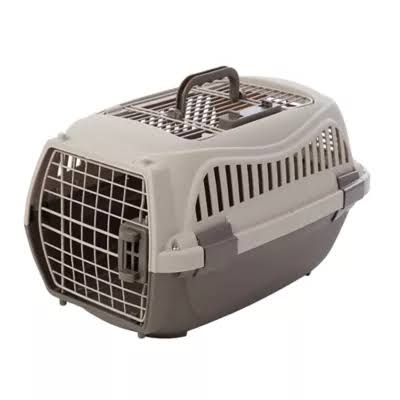
Hard carriers with a top that can be easily removed are both safer and can allow a veterinarian to examine your cat while they stay in the familiar and comfortable bottom of the carrier. Carriers that have an opening on the top also help you to get your cat into and out of the carrier without having to shove your cat in or drag them out.
Keep your carrier out in the open and accessible at all times. This way it does not become a signal that something unpleasant is about to happen. Place comfortable blankets or towels inside and leave toys and treats in there, too. For kittens, you can make it a fun play spot right from the beginning.
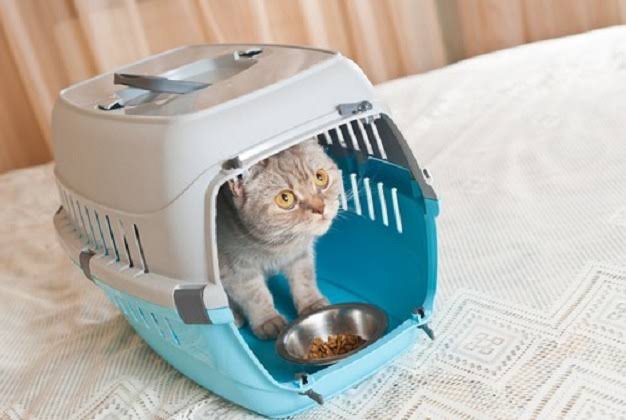
Feeding your cat in the carrier is a great way to help them love the carrier. for a cat that is already afraid of the carrier you can take the top off and begin feeding a little way away and gradually move the food closer. Once your cat is eating comfortable in the bottom, add the top, then the open door, and finally closing your cat inside while they eat. Don’t be afraid to take it nice and slow, it may take several weeks to desensitize a cat to a carrier he was previously afraid of. If he stops eating it is a sign your cat is uncomfortable and you may have to back up a step. Just go at your cat’s pace.
Once your cat is happily eating in the carrier with the door closed, the next step is to gently lift the carrier and walk around a little. Again, watch your cat to make sure they are comfortable. You may have to just start with lifting the carrier once and proceed from there.
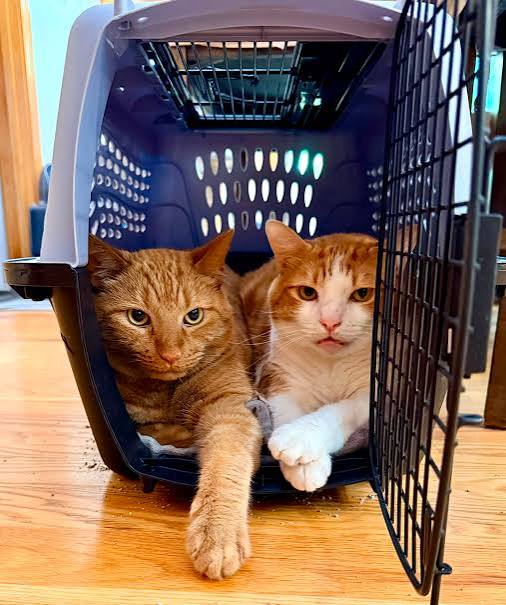
Now you can easily carrier your cat in the carrier around the house, it is time to take it outside. Start with short walks outside for cats who are indoors only and not a comfortable outside. j Gradually progress to placing the carrier in the car (with the car off) then turn on the car, then a short drive around the block. All the while your cat is eating in the carrier and relaxed. The drives can become longer over time and you will eventually have a very contented travel companion.
The final step involves arriving at the vet for happy visits where nothing happens except treats, pets, and playtime. Many veterinary offices will appreciate your efforts, just call ahead and make sure they are not to busy.
With all of these steps you can go at the pace your cat chooses, Some may be able to skip ahead while others may need to have the steps broken down very small. Keep the sessions short, only a few minutes, and in no time your kitty will no longer be a magician in a disappearing act each time the carrier comes out.